
A decision intelligence platform for risk brings scattered risk, control, asset and supplier data together into a connected view and uses AI to help prioritise exposures and support executive choices. The practical result: the security leader spends less time building spreadsheets and more time defending decisions to the board with traceable evidence.
This is the problem many risk teams still live with. Information is spread across vulnerability tools, control maps, supplier responses and audit emails. When the board asks “what is our biggest exposure and what are we already doing about it?”, the answer can take days to assemble and arrive out of date. A decision intelligence platform shortens that distance between raw data and the decision.
What a decision intelligence platform is and how it uses AI
At the opening of Gartner IT Symposium/Xpo on 19 October 2026, Gartner said that CIOs and IT leaders report AI risk growing faster than the value it delivers. In the same release, a third-quarter 2026 survey of 303 CIOs and IT risk management leaders found that only 25% of CIOs align technology risk with business risk (Gartner, “Gartner Says AI Risk is Rising Faster Than AI Value”, October 2026). A decision intelligence platform exists precisely to close that gap: it organises risk in business context before recommending any action.
In practice, the platform combines three layers. The first integrates sources: scanners, the CMDB, supplier questionnaires and control frameworks. The second applies AI models to correlate signals, estimate impact and suggest priorities. The third presents everything in a decision interface, with scenarios and evidence attached.
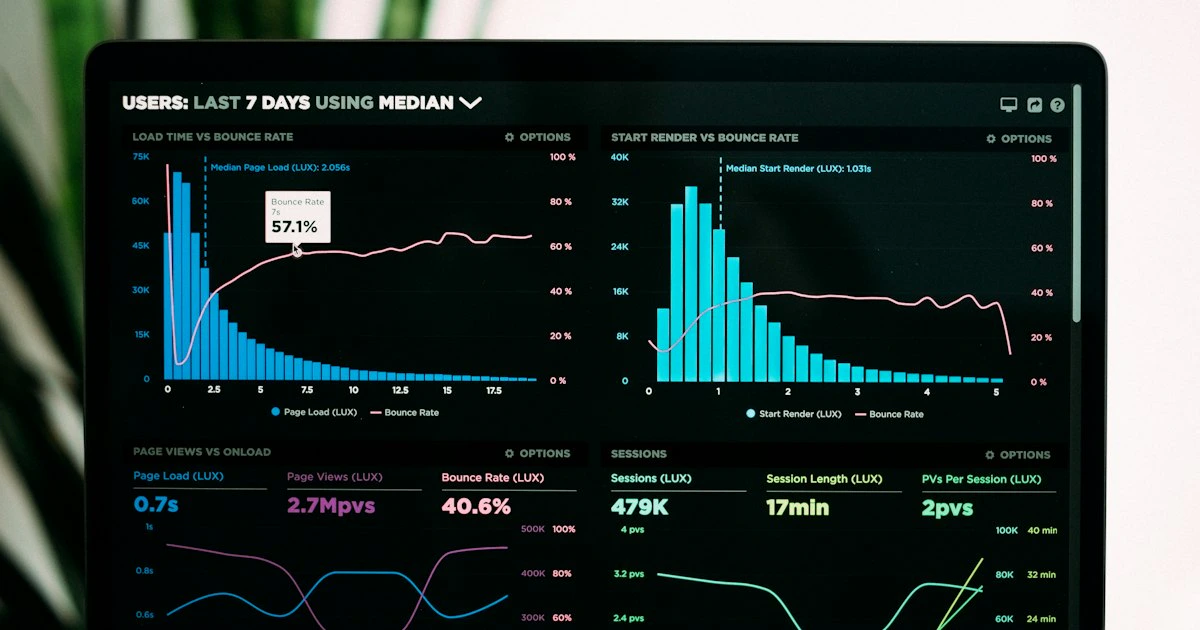
Futture’s Eagle follows this design with a human-in-the-loop model. AI helps prioritise and gather context, but the decision stays with the accountable person, who reviews, adjusts and approves. That separation of roles matters for anyone who has to answer to regulators and auditors.
Turning scattered risk data into actionable insight
The volume of information has already outgrown manual analysis. In 2025, 48,185 CVEs were published, 20.6% more than the 39,962 of 2024, according to Jerry Gamblin’s analysis, which excludes rejected CVEs (Jerry Gamblin, 2025 CVE Data Review, January 2026; public data in NIST’s National Vulnerability Database (NVD)). Triaging vulnerability by vulnerability in spreadsheets at that pace is not realistic. Without a consolidation mechanism, the team spends its time organising data instead of reducing exposure.
The turning point comes when the platform normalises those sources into a common model. An asset now carries its business criticality, its associated controls, its open vulnerabilities and the suppliers that touch it. From there, the question changes: it is no longer “how many CVEs do we have?” but “which exposures threaten the processes that sustain revenue?”.
A single control inventory speeds this work up. The same control, mapped once, can be reused across ISO/IEC 27001, the LGPD (Brazil’s General Data Protection Law), SOC 2 and NIST CSF, to the extent that their requirements overlap, with traceability down to each requirement. To structure the prioritisation behind that base, it is worth reviewing how to go beyond the 5x5 matrix and quantify risk.
From fragmented spreadsheets to a connected view
When data lives in silos, each area sees only a piece. A connected view reduces duplicated effort: evidence collected for the SOC 2 report can also serve ISO/IEC 27001, and a change to a control shows up in every framework linked to it. The guide to enterprise risk management software in Brazil details how to assess that consolidation when buying.
How to support executive decisions with evidence and scenarios
Risk decisions improve when they come with evidence and a scenario, not just an isolated number. In the 2025 edition of IBM’s Cost of a Data Breach report, conducted by the Ponemon Institute with 600 organisations that suffered breaches between March 2024 and February 2025, 63% of breached organisations either had no AI governance policy or were still developing one, and those with high levels of shadow AI saw breach costs on average US$670,000 higher than those with low or no shadow AI (IBM, Cost of a Data Breach Report 2025, July 2025). Data like this only becomes a decision when it is connected to the organisation’s own context.
A decision intelligence platform lets you compare scenarios side by side. What happens to exposure if we invest in MFA rather than network segmentation? Which supplier concentrates the most residual risk? Each answer comes with the evidence behind it, which tends to shorten committee discussions and reduce reliance on opinion.
The practical effect is a change in the register of the conversation. Instead of debating the severity of a CVE, executives discuss business impact, remediation time and opportunity cost. When the organisation wants to take that conversation into monetary terms, cyber risk quantification (CRQ) comes in.
The role of AI in risk prioritisation and resource allocation
AI comes in to support prioritisation and allocation, not as an oracle. In the World Economic Forum’s Global Cybersecurity Outlook 2026, 94% of respondents identify AI as the factor expected to change cybersecurity the most in 2026, and 87% identify AI-related vulnerabilities as the cyber risk that grew fastest over 2025 (World Economic Forum, Global Cybersecurity Outlook 2026, January 2026). The same AI that widens the attack surface can help order the defence.
For prioritisation, the platform crosses asset criticality, the exploitability of the flaw and business context to indicate what to address first. That avoids the common mistake of remediating by the generic CVSS score alone and ignoring what actually threatens critical processes. To see how to combine CVSS, EPSS and CISA’s KEV catalogue in that queue, read the guide on how to prioritise vulnerabilities.
For allocation, the same logic applies at budget scale. Comparing how much exposure each investment reduces helps the CISO defend the budget with numbers, not just severities. That comparison is stronger when the organisation has already defined its risk appetite in numbers.
Why the human-in-the-loop model matters
Automating triage does not mean giving up judgement. AI recommends; a person decides and takes accountability. That arrangement preserves the traceability auditors and regulators expect and prevents a high-impact decision from depending on an unexplained black box. Before expanding the use of AI in these decisions, it is worth knowing the criteria for AI governance software.
From analysis to decision: consolidating risk at board level
Consolidating risk at board level means delivering a single, comparable and defensible view, not a report with hundreds of technical lines. The board needs to know what the material exposure is, what is under control and where a decision is pending. A decision intelligence platform produces that cut with the evidence one click away.
That consolidation also solves a calendar problem. Instead of compiling a static pack every quarter, the board can follow a dashboard updated by continuous monitoring of controls and evidence. Compliance stops being a snapshot and becomes a monitored state, which matters for ISO/IEC 27001, the LGPD, SOC 2 and NIST CSF.
The next step is choosing the right technology base to sustain that flow. If you are at that evaluation stage, the guide GRC software: what it is and how to choose helps you compare criteria before deciding.
Conclusion
Start with a concrete scope: pick one critical business process, map its assets, controls and suppliers in a single view and simulate two possible responses to a real exposure. The exercise quickly shows how much easier the decision becomes when the data arrives ready to decide on. If you want to do this on a platform that connects cyber, GRC and enterprise risk with human-in-the-loop AI, explore Futture’s Eagle.
Further reading: How the CISO should report cyber risk to the board; Risk Matrix: How to Build It and Prioritise Threats; AI Security Software to Reduce Cyber Exposure.
Frequently asked questions
What is a decision intelligence platform for risk?
It is a system that brings risk, control, asset and supplier data together into a connected view and uses AI to help prioritise exposures and support traceable executive decisions, while final judgement stays with people.
What role does AI play in risk prioritisation?
AI helps correlate vulnerabilities, asset criticality and business context to rank what to address first. With 48,185 CVEs published in 2025 alone, according to Jerry Gamblin’s analysis of NVD data, triaging everything by hand in spreadsheets is no longer realistic.
How does the platform support board decisions?
It translates technical risk into scenarios, business impact and indicators, with the evidence linked to every statement. The board can then discuss priorities and resource allocation using comparable data instead of static reports.
Does the decision remain human in the human-in-the-loop model?
Yes. AI recommends and organises evidence, but a person reviews, adjusts and approves. That preserves accountability and makes it easier to show auditors and regulators who decided, and on what basis.
How does this relate to continuous compliance?
A single control inventory can be reused across ISO/IEC 27001, the LGPD (Brazil’s General Data Protection Law), SOC 2 and NIST CSF, to the extent that their requirements overlap. With controls and evidence monitored continuously, compliance status no longer depends only on point-in-time audits.