
A good cyber risk report to the board answers three questions in a few minutes: how much the company could lose, what is already under control and what decision the board needs to take now. The CISO's most common mistake is bringing to the boardroom the same spreadsheet used with the technical team, full of vulnerabilities, acronyms and logs that no one on the board has the time or context to interpret.
This guide shows how to structure that communication from start to finish: why it has become a governance matter, how to translate technical metrics into business language, which indicators the board understands, which frequency and format work and how to consolidate everything into a reliable executive view.

Why communicating cyber risk to the board is critical
Cyber risk is no longer an infrastructure topic; it is a permanent item on the governance agenda. Boards are accountable for decisions on capital, continuity and reputation, and a significant incident hits all three directly. When the board does not understand the exposure, it cannot prioritise investment or knowingly accept or reject risk.
The numbers help to size what is at stake. In the 2026 edition of the Cost of a Data Breach report, by IBM with the Ponemon Institute, the global average cost of a data breach reached US$4.99 million, up 12% on the previous year and a record for the series. The same study puts at US$1.93 million the savings of organisations that make extensive use of AI and automation in security, compared with those that use none (IBM, Cost of a Data Breach Report 2026). This kind of figure translates technology into money, which is the board's natural language.
There is also a convergence between CISOs and boards. In Proofpoint's Voice of the CISO 2026 report, which surveyed more than 1,600 CISOs in 16 countries, including Brazil, 85% say they see eye to eye with their boards on cybersecurity, up from 64% in 2025, and 86% believe cybersecurity expertise should be required at board-director level, up from 66% (Proofpoint, September 2026). Alignment is improving, but it depends on the CISO being understood.
In Brazil, this communication also has a regulatory basis. For institutions authorised by the Central Bank of Brazil, Resolution No. 4,893/2021 of the National Monetary Council (CMN) requires the cybersecurity policy and the incident action and response plan to be approved by the board of directors (art. 9) and the annual report on the implementation of that plan to be presented to the board by 31 March of the following year (art. 8, § 2) (CMN Resolution No. 4,893/2021); the minimum content of that report was expanded by CMN Resolution No. 5,274/2025. Our posts on CMN Resolution 4,893 and CMN Resolution 5,274 cover these requirements in detail. Outside financial services, the LGPD requires controllers and processors to compensate for damage caused by unlawful processing of personal data (art. 42) and requires the controller to notify the ANPD (Agência Nacional de Proteção de Dados, Brazil's data protection authority) and data subjects of security incidents that may cause significant risk or harm (art. 48) (Law No. 13,709/2018). Exposures of that size call for oversight at board level.
The frameworks point the same way. NIST CSF 2.0 states, in subcategory GV.RR-01, that organisational leadership is responsible and accountable for cybersecurity risk, and asks for risk appetite and tolerance statements to be established and communicated (GV.RM-02) and for risk management outcomes to be reviewed to adjust strategy (GV.OV-01) (NIST CSWP 29). Our post on the six functions of NIST CSF 2.0 explains the Govern function in detail.
Translating technical metrics into business language
The CISO's central task in the boardroom is translation. The board does not need to know how many CVEs were published in the year or how many alerts the SOC processed. It needs to know what those numbers mean for results, operations and compliance with legal and contractual obligations.
The practical rule is to convert each technical metric into one of three currencies the board recognises:
- Financial impact: the potential loss, in money, of a concrete risk scenario, taking into account fines, downtime, remediation and reputation.
- Operational impact: which critical processes stop, for how long and with what effect on customers, revenue and contracts.
- Regulatory impact: which obligation is exposed, for example an ISO/IEC 27001 requirement, a SOC 2 criterion, a NIST CSF outcome or a specific article of the LGPD, and what the consequence of non-compliance is.
A hypothetical example makes the difference clear. Telling the board there are "3,200 open critical vulnerabilities" creates anxiety without direction. Saying that "the flaws concentrated in the payments system represent up to R$12 million (Brazilian reais) of exposure and put at risk the certification our largest customer requires" turns technical data into a resource allocation decision.
Cyber risk quantification is what underpins that translation. Instead of rating threats only as "high, medium, low", the CISO assigns ranges of probable financial loss to each scenario. That makes it possible to compare cyber risk with other enterprise risks in the same unit and to put security at the same decision table as credit, market and operational risk. Our post on Cyber Risk Quantification (CRQ) shows how to reach those ranges, and The 5×5 matrix does not say what risk costs explains why a heat map cannot answer the board's question about total exposure.
Indicators and dashboards the board understands
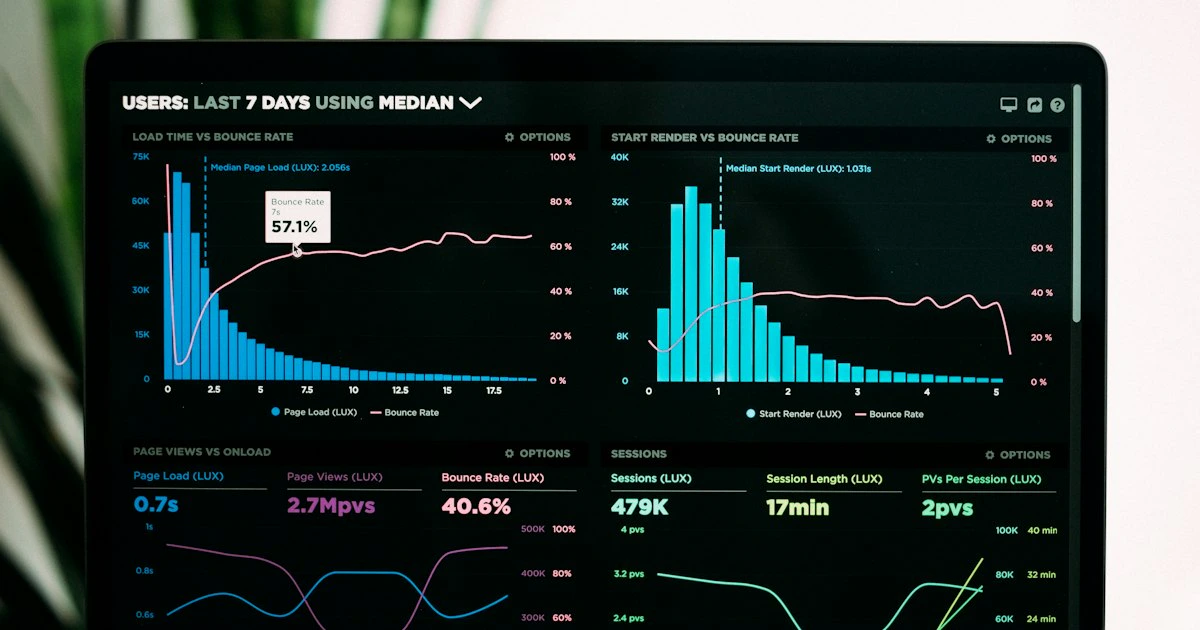
Boards decide better with a few stable indicators than with dozens of metrics that change from meeting to meeting. The aim is not to show everything the security function does, but to offer a quick read of posture and trend. An effective executive dashboard usually fits on one screen and supports four questions:
- What is our financial exposure to cyber risk today? Aggregate potential loss, and by critical area.
- Is risk going up or down? The trend over recent quarters matters more than the isolated figure.
- Are we delivering on what we committed to? Alignment with the applicable frameworks and obligations, such as ISO/IEC 27001, SOC 2, NIST CSF and the LGPD, with the most relevant open items.
- Are we ready to respond? Time to detect and contain, and the maturity of the continuity plan.
Some indicators that work well at board level:
- Residual risk per critical business process, in financial terms.
- Movement of exposure against the risk appetite approved by the board.
- Compliance status by framework, traceable to the evidence.
- Risk concentrated in strategic third parties and suppliers.
- Mean time to detect and respond to incidents.
For the appetite indicator to work, the board's statement has to become a measurable limit, as our post Risk appetite: from sentence to number shows. Avoid charts of alert volumes, heat maps without financial values and any screen that needs a specialist to read it. The guiding principle is traceability: every figure presented should be drillable, on demand, down to the evidence behind it, so the board's confidence does not rest solely on the CISO's word.
Frequency and format of the cyber risk report to the board
A common rhythm for reporting cyber risk to the board is quarterly, following the cycle of other governance items. That interval is long enough to show a trend and short enough to allow a change of course. In financial institutions, it sits alongside the annual report that CMN Resolution No. 4,893/2021 requires. On top of that comes a non-negotiable rule: immediate, out-of-cycle communication of any material incident or significant change in the risk profile. The board should never learn of a serious incident from the press.
A quarterly report is only reliable if, underneath it, risk management runs continuously, with owners and decisions recorded week by week. That is the point of our post on the CROC, the Cyber Risk Operations Center: the committee dashboard is the output of an operating cycle, not a last-minute effort.
As for format, a structure that respects the board's time has four blocks:
- One-page executive summary: current risk posture, change since the previous quarter and the two or three decisions the board needs to take.
- Prioritised exposure: the main risk scenarios in financial terms, with a clear recommended action for each.
- Compliance and obligations: position against the applicable frameworks and regulations, highlighting the deadlines and open items with the greatest impact.
- Optional technical appendix: detail available for anyone who wants to go deeper, kept out of the main presentation.
The CISO who owns the room presents decisions, not reports. Each block should end in a governance question: approve an investment, formally accept a residual risk or adjust the risk appetite. That chain, from exposure to decision, is what separates a mature report from a mere technical account of activity.
Tools that consolidate risk into views for the board
Producing this report by hand every quarter, stitching together spreadsheets from several teams, is slow and fragile. Out-of-date data, figures that do not reconcile between areas and a lack of traceability undermine the CISO's credibility at exactly the moment it matters most. That is why consolidation in an integrated platform tends to be the route to a reliable report once the number of frameworks, risks and areas grows. If you are assessing that route, our guide GRC Software: What It Is and How to Choose sets out the evaluation criteria.
An Enterprise Risk Intelligence platform tackles the problem at source by connecting risk, controls, assets, suppliers, compliance and cyber exposure in the same base. That is the proposition of Futture's Eagle: a control mapped once can be reused across frameworks, traceable to each requirement, and the enterprise risk module is designed to consolidate the risk view into board dashboards, so that each indicator can be opened down to the evidence behind it.
The use of AI in this context should be assessed carefully. The value lies not in generating automatic conclusions but in helping to prioritise risks, organise evidence and translate technical risk into business impact. In a human-in-the-loop model, the machine organises and correlates the volume no team can process by hand, while the decision remains human and auditable. In Eagle, AI suggests classifications, relationships and priorities, and the user reviews, approves, rejects or adjusts each relevant result (how AI works in Eagle). For the board, that means receiving an up-to-date view, comparable quarter on quarter and backed by verifiable data.
The practical outcome is a report that stops being a spreadsheet-assembly exercise and becomes a strategic reading, in which the CISO arrives at the meeting with consistent figures and the board reaches its decision with confidence.
Conclusion
Before the next reporting cycle, pick a single critical business process and rebuild the risk communication around it: assign a financial loss range to the scenario, connect the exposure to the applicable regulatory obligations and summarise it all on one page that ends in a governance decision. Take that format to the board as a pilot. When the board sees it can decide in minutes, with traceable figures, you will have set the standard for the other areas, and the conversation about consolidating risk in an integrated platform is likely to come from the board itself.
Further reading: Decision Intelligence Platform for Risk; Risk Matrix: How to Build It and Prioritise Threats.
Frequently asked questions
How often should the CISO report cyber risk to the board?
A common rhythm is a structured report every quarter, with immediate out-of-cycle communication whenever there is a material incident or a significant change in the risk profile. In Brazilian financial institutions, CMN Resolution No. 4,893/2021 requires, at a minimum, an annual report presented to the board of directors by 31 March.
Which cyber risk indicators does the board actually understand?
Indicators that connect exposure to decisions: potential financial loss in ranges, residual risk by critical area, position against the approved risk appetite, compliance status against frameworks and the quarterly trend of those figures.
How do you translate technical metrics into the board's language?
Convert technical volumes, such as the number of vulnerabilities, into business impact: how much the company could lose, which processes would stop and which regulatory or contractual obligation is exposed.
What should be left out of a risk report for the board?
Avoid long lists of CVEs, logs, tool jargon and operational detail. The board needs context, priorities and decision options, not the underlying technical work, which can go in an appendix.
Official references
- IBM — Cost of a Data Breach Report 2026
- Proofpoint — 2026 Voice of the CISO report (news release, September 2026)
- CMN Resolution No. 4,893/2021 — Central Bank of Brazil
- CMN Resolution No. 5,274/2025 — Central Bank of Brazil
- Law No. 13,709/2018 — Brazil’s General Data Protection Law (LGPD)
- NIST Cybersecurity Framework 2.0 (NIST CSWP 29)